
Learn to Ski in Gulmarg, Kashmir: A Beginner's Guide
You do not need to live near the Alps to learn to ski. Gulmarg, in Kashmir, is one of India's best-known ski areas, and a week there is a great way to start.
Skiing in India sounds like a joke until you picture it: a gondola climbing through cloud, snow squeaking under your boots, Himalayan peaks stacked up in every direction. And then yourself, five minutes into your first lesson, flat on your back and laughing.
That is Gulmarg. It is a real ski area, it is surprisingly beginner-friendly with a good instructor, and a week is plenty to go from "never been on snow" to "I did that".
Yes, you can learn to ski or snowboard in Gulmarg. The season usually runs from about December to March, the resort sits at around 2,650 metres, and a week with lessons is a good way to start. Dress in layers, take the first day easy for the altitude, and expect to fall over a lot.
Why Gulmarg
Gulmarg is a ski area high in the Kashmir Himalayas, with a gondola cable car that takes you up the mountain. It is one of the best-known places to ski and snowboard in India, and it is easy to combine with a few days in Srinagar, so you get lake and mountains in one trip.
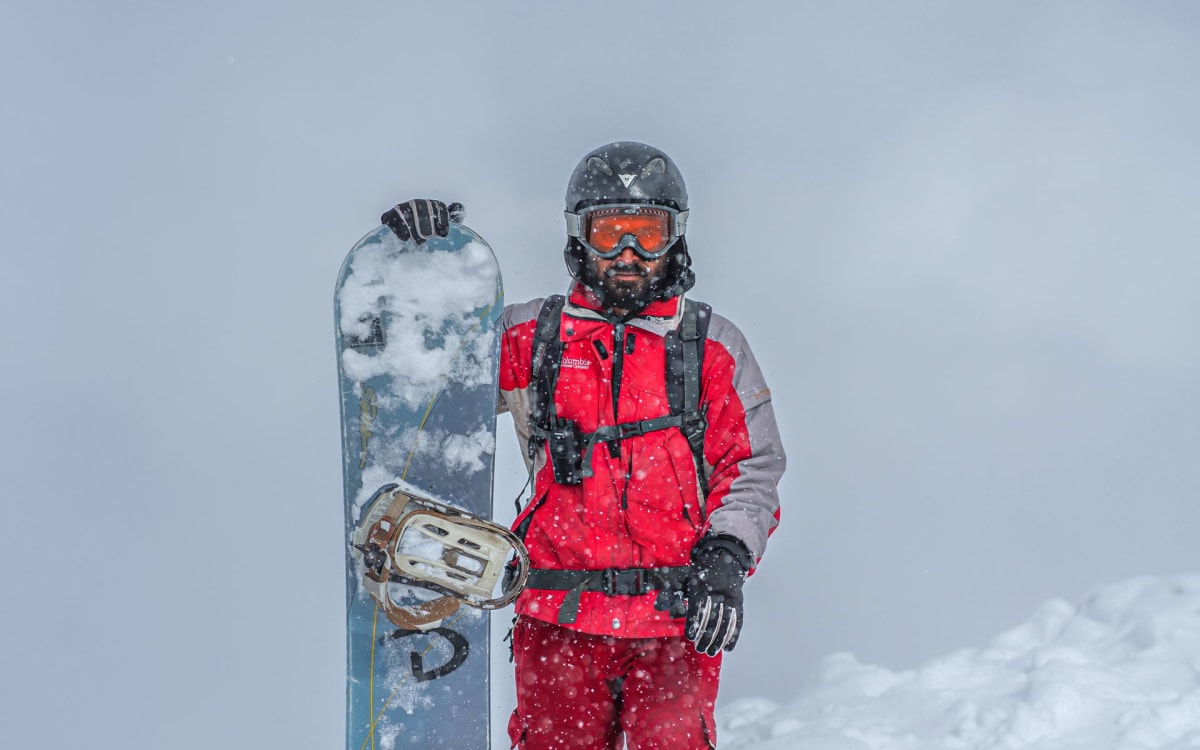
When to go
The season usually runs from about December to March, depending on snowfall. Our Kashmir Snow Week sits in the middle of February, which is typically the heart of the season, with snow cover at its best.
Skis or snowboard?
Honest answer: skiing is usually easier on day one, while snowboarding is harder to start and often more rewarding later. Neither is wrong. Pick whichever you are more excited about. On our Loop you can choose either, and the lessons are included.
Falling is part of learning, and snow is a forgiving place to do it. Everyone on a first-week lesson spends a good chunk of it sitting down. Laughing about it makes you improve faster.
What a first week actually looks like
- Arrive in Srinagar. Settle in, then have dinner together.
- Dal Lake, then the drive up. A morning shikara ride, then up to Gulmarg for a gear fitting.
- First day on snow. Lessons with an instructor.
- A second day of lessons. Build on what you learned, then a slow evening by the fire.
- Up the gondola. Himalayan views, one more session, then a group dinner.
- Goodbyes. Breakfast and the drive back to Srinagar.

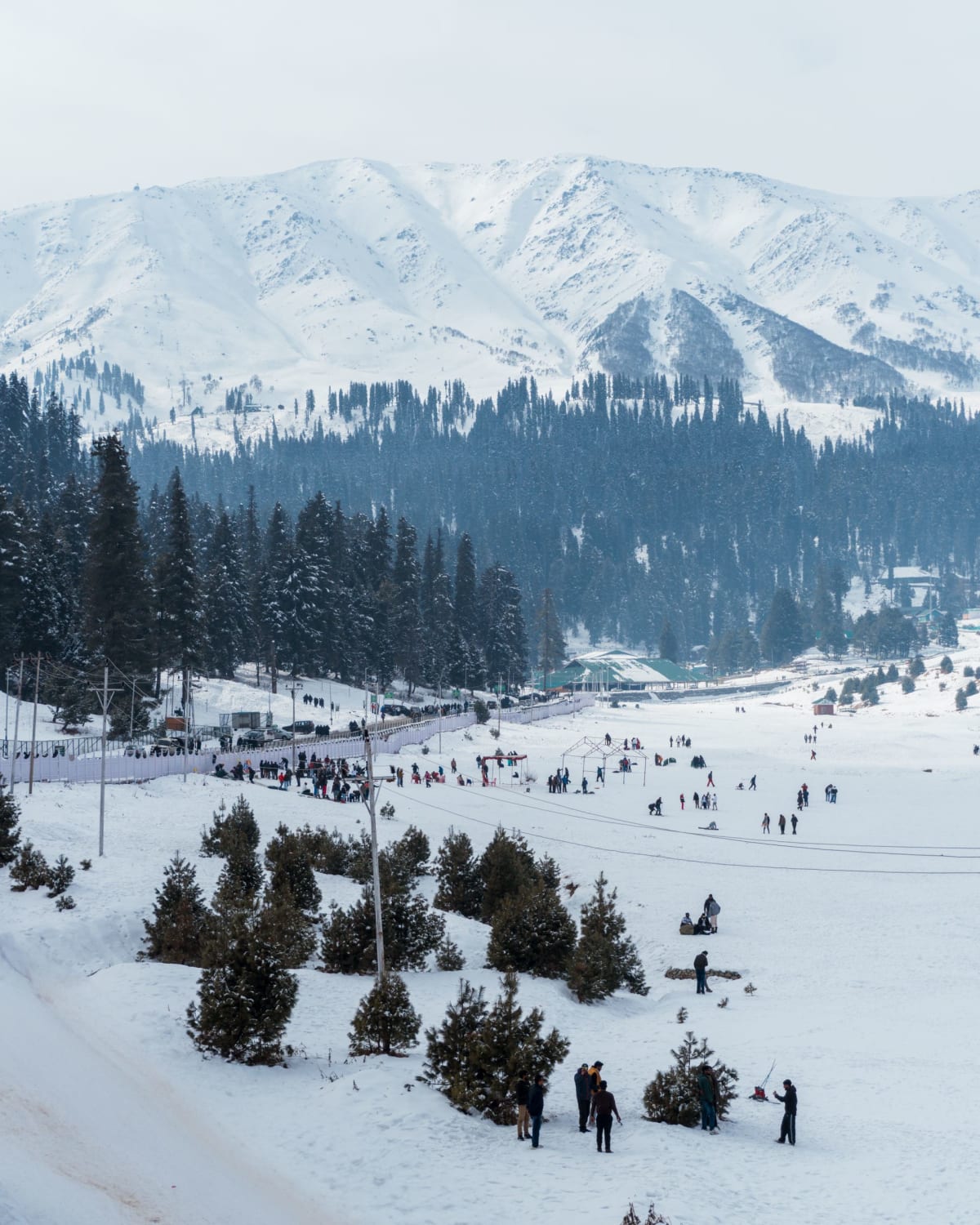
Getting to Gulmarg
Most people fly into Srinagar and drive up to Gulmarg, a trip that usually takes around two hours, depending on the road and the snow. Spending a night or two in Srinagar first is a gentle way to arrive: you can see Dal Lake, ease into the cold and let your body get used to the height before you go higher. Gulmarg itself sits at about 2,650 metres, so even the village is properly high.
The mountain in numbers
Gulmarg is a serious mountain, and it helps to know what you are looking at. According to skiresort.com, the ski area runs from about 2,650 metres at the base to 3,980 metres at the top of the Apharwat gondola, a vertical drop of roughly 1,330 metres. There are around 25 km of pistes, and about 70 percent are rated difficult, with the rest split between easy and intermediate.
That sounds intimidating, and it is worth being honest about it: the upper mountain is for strong skiers. Beginners spend their time on a small valley area with short lifts and gentle slopes, which is exactly where you want to learn. The gondola ride to the top is still a highlight for everyone, with huge Himalayan views, and you can take it as a sightseer even if you are not skiing the top runs.
How beginners actually progress
Your first day is mostly about balance. You learn to put your skis on, stand up, slide in a straight line on a flat slope and stop with the snowplough, where the tips of your skis point towards each other. By the second day you are linking gentle turns. By the third or fourth, you are riding a short beginner lift on your own and finding that the fall rate has quietly dropped.
Snowboarders have a steeper first day, often spent practising edges and sliding on one foot, then a sudden breakthrough around day three. Neither path is faster overall, and both are much easier with an instructor, because bad habits are hard to unlearn.
Take breaks. Beginners tire quickly, and most falls happen when legs are tired. Finish the day on a good run, even if it means finishing early.
Altitude and cold
Take the first day gently, drink more water than you think you need and listen to your body. Gulmarg is properly cold, with days below freezing, so layers are your friend.
A simple packing list:
- Thermal base layers and a warm mid layer.
- A waterproof jacket and trousers.
- Waterproof gloves, a hat and a neck warmer.
- Sunglasses or goggles, and sunscreen. Snow glare is strong.
We send a complete packing list when you book.
Safety on the snow
Skiing is a sport with real risks, and a few habits make a big difference. Wear a helmet, because falling is part of learning. Stay on marked, patrolled slopes and follow your instructor, particularly after fresh snowfall, when avalanche risk off the pistes can rise. Warm up before you start, and stop when your legs are tired, because most beginner injuries happen late in the day.
Check that your travel insurance covers winter sports and that the cover includes treatment at altitude. Some policies exclude snow sports unless you add them, so read the fine print before you fly.
Getting fit before you go
You do not need to be an athlete, but a few weeks of preparation will make your first days far more fun. Focus on your legs and your balance. Squats, lunges and wall sits build the thighs you will use constantly, and single-leg standing improves balance. Add some walking or cycling for stamina, because everything is harder at altitude.
Sleep well in the week before you leave, drink plenty of water and avoid arriving exhausted. A rested body copes with cold and altitude noticeably better.
Renting or buying gear
For a first trip, rent your skis or board, boots and helmet, and buy only the clothing you will use again. Fit matters more than brand, so ask the rental shop to check that your boots feel snug but not painful. A good pair of waterproof gloves and proper goggles are worth owning, because cold hands and glare can ruin a day faster than any fall.
Warm food and Kashmiri flavours
One of the best parts of a Gulmarg day is what happens off the snow. Kashmir has a lovely food tradition, and after hours in the cold, a cup of kahwa, the fragrant green tea with saffron and almonds, feels like a small miracle. Look out for hot noon chai, fresh bread from local bakeries and slow-cooked dishes such as rogan josh. Eat well, because skiing burns far more energy than it feels like.
In Srinagar, it is worth spending a few hours on a shikara ride across Dal Lake and wandering the old city. It is a gentle contrast with the mountain, and a good way to spend your first day while your body adjusts to the altitude.
The details
Here is how we do it, if you would like someone else to handle lessons, stays and transfers.
Flights to Srinagar are not included. You choose skis or a snowboard, and you tell us your level in the application so we can match you with the right lesson.
Questions
Quick answers to common questions about this guide.
Can complete beginners join?
Lessons are part of the trip, so you can learn as you go. Tell us your level in the application.
How cold does it get in Gulmarg?
Very cold in winter, with days below freezing. We send a packing list when you book.
Is the gondola ride included?
Yes. A Gulmarg gondola ride is part of the Loop.
Is Gulmarg good for beginners?
Yes, with lessons. Beginners use a small valley area with short lifts and gentle slopes. The upper mountain is mostly difficult terrain, so stay on the beginner slopes until your instructor says you are ready.
How high is Gulmarg?
The village and base area sit at about 2,650 metres, and the top of the Apharwat gondola reaches around 3,980 metres, so take it easy on the first day and drink plenty of water.
Abhishek Doashii is a seasoned traveller and the founder of WanderLOOPS. Follow his trips on Instagram: @abhishekdoashii.
Keep reading
More WanderLOOPS guides on group travel in India.
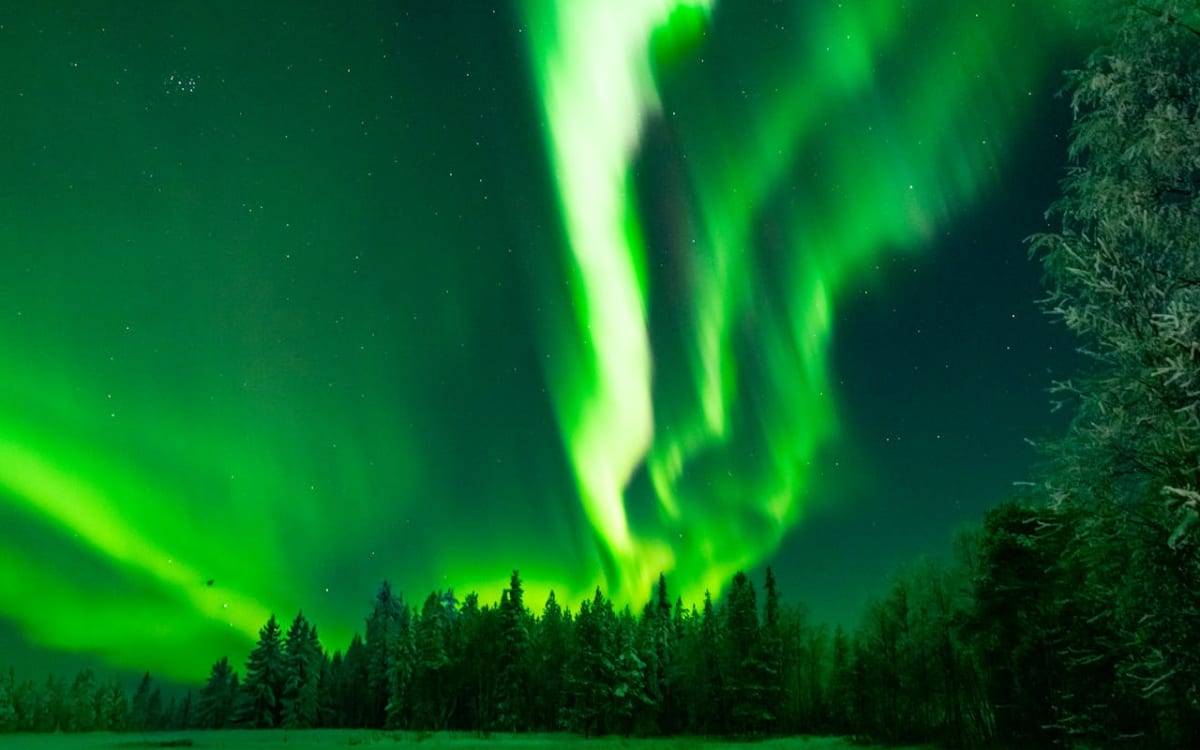
Northern Lights in Finland: When to Go and What to Expect
The Northern Lights are real, beautiful and impossible to schedule. Here is how to give yourself the best chance in Lapland, and what else the trip offers while you wait.
7 min read
How to Make Friends on a Group Trip With Strangers
Strangers on day one, friends by day three. It is not luck. Here are seven habits that make it happen.
7 min read