
Christmas to New Year's Eve in Europe: Amsterdam to Vienna
Canals, Christmas markets, beer halls, alpine lakes and fireworks over Vienna. Here is how five cities fit into one 12-day winter route, and what each one is best for.
Picking where to spend New Year's Eve is a bit like picking a personality. Amsterdam is the candlelit canal. Prague is the postcard. Munich is the beer hall. Salzburg is the music box. Vienna is the waltz.
The good news is you do not have to choose. These cities are well connected, so one winter route can cover all five.
Start in Amsterdam for a gentle Christmas, take the night train to Prague, work through Munich and Salzburg, and ring in the new year with street fireworks in Vienna. It is twelve days, mostly by train, and each city feels completely different. Indian passport holders need a Schengen visa, so start early.
Amsterdam: canals and a quiet Christmas
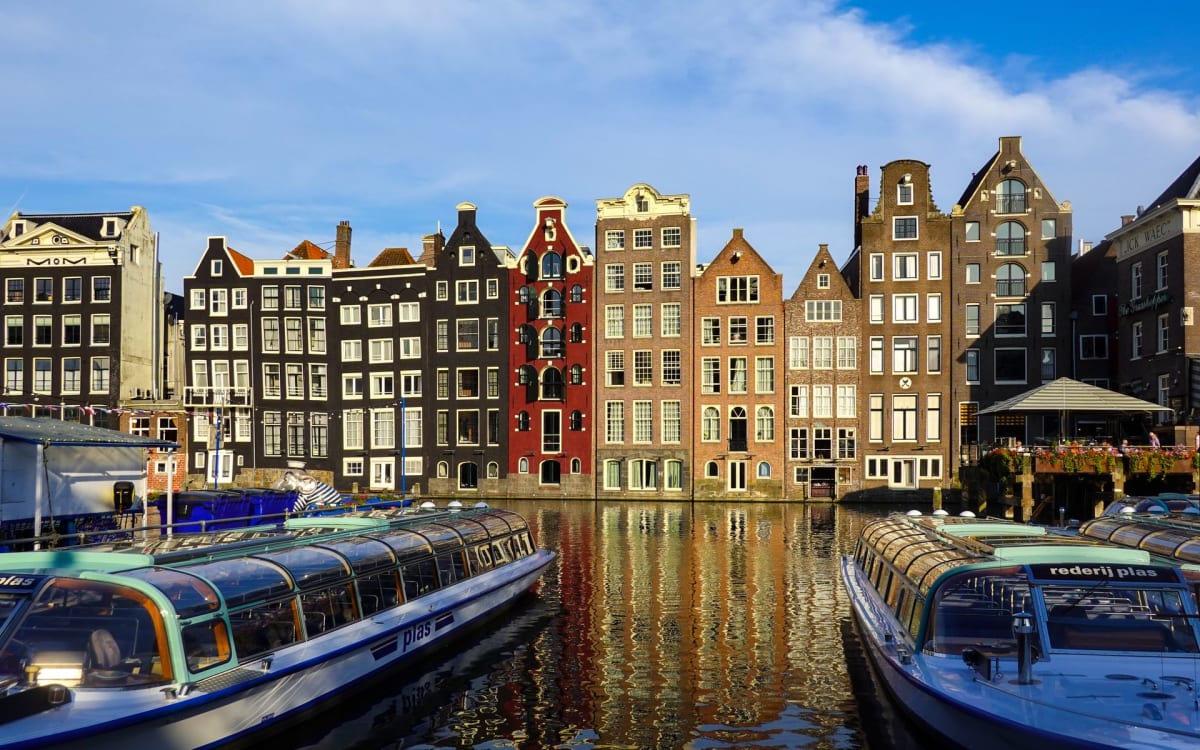
The route starts in Amsterdam, which suits the Christmas run-up well. Arrive on December 23 and wander the Jordaan in the evening, where the canal-side lights make even a short walk feel festive. The next day is for the Nine Streets, with their small shops and window displays, and an evening canal cruise.
Christmas Day itself is slow and relaxed, which is the point. Many shops and restaurants keep short hours on December 25 across Europe, so we plan it as a gentle day before the night train.
The night train to Prague
On the evening of December 25 we collect our luggage and board the European Sleeper night train at about 10:30 PM. You sleep in a couchette and wake up close to Prague, arriving around 10:55 AM on December 26. It replaces a flight and a hotel night, and it is a story you will actually tell people.
Keep a small bag with a warm layer, water and your toiletries within reach. Your main luggage will be stowed, and couchettes are compact.
Prague: the fairytale stop
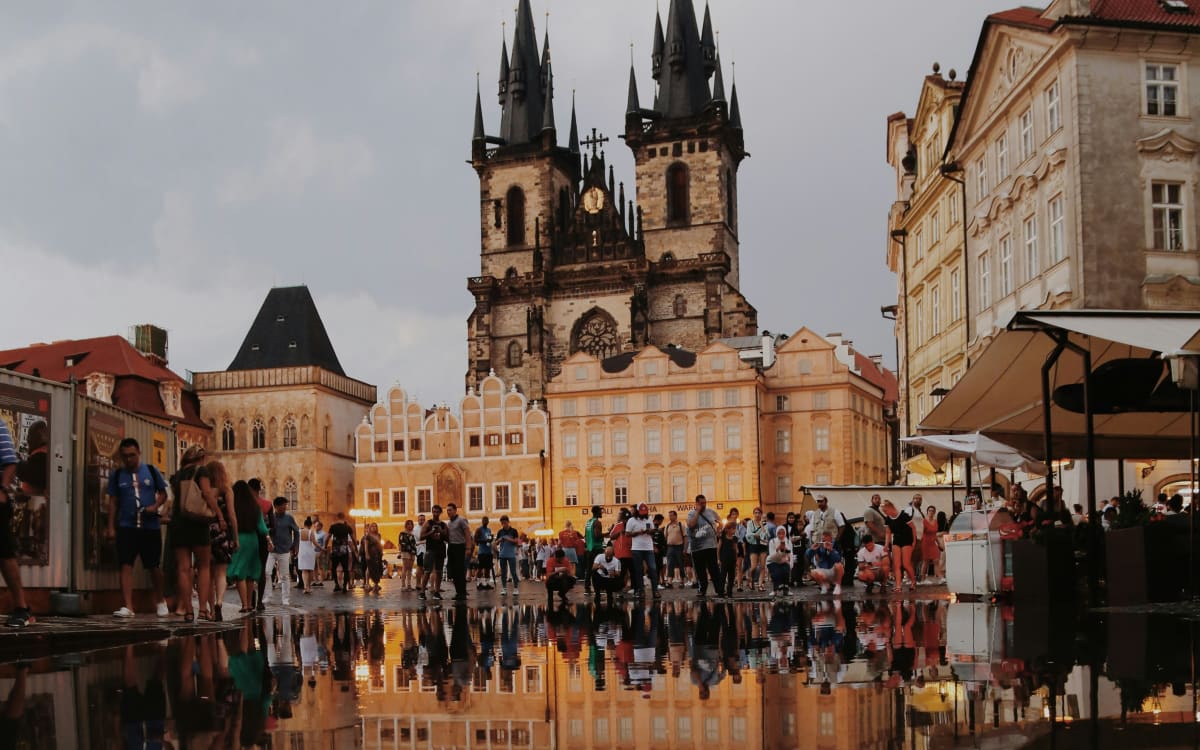
Gothic spires, snowy cobblestones and the Old Town Square, with mulled wine in hand. Arrive in the morning, spend the day around the Christmas market, and cross Charles Bridge at dusk, when the statues are lit and the crowds thin out.
Day two is for Prague Castle and St. Vitus Cathedral, followed by dinner in a proper Czech beer hall.
Munich: Bavarian beer halls and fairy-tale castles
A scenic train of about five and a half hours takes you from Prague to Munich. Start at Marienplatz, the heart of the old town, where the Christmas market sits under the Gothic town hall.
The next day is a day trip to Neuschwanstein Castle or Nymphenburg Palace, followed by dinner at the Hofbräuhaus, the most famous beer hall in the city. Expect long tables, brass music and plenty of sharing.

Salzburg: the alpine pause
It is only about an hour and a half by train from Munich to Salzburg. Spend December 30 in the Old Town and along Getreidegasse, the narrow shopping street where Mozart was born, with the fortress above you.
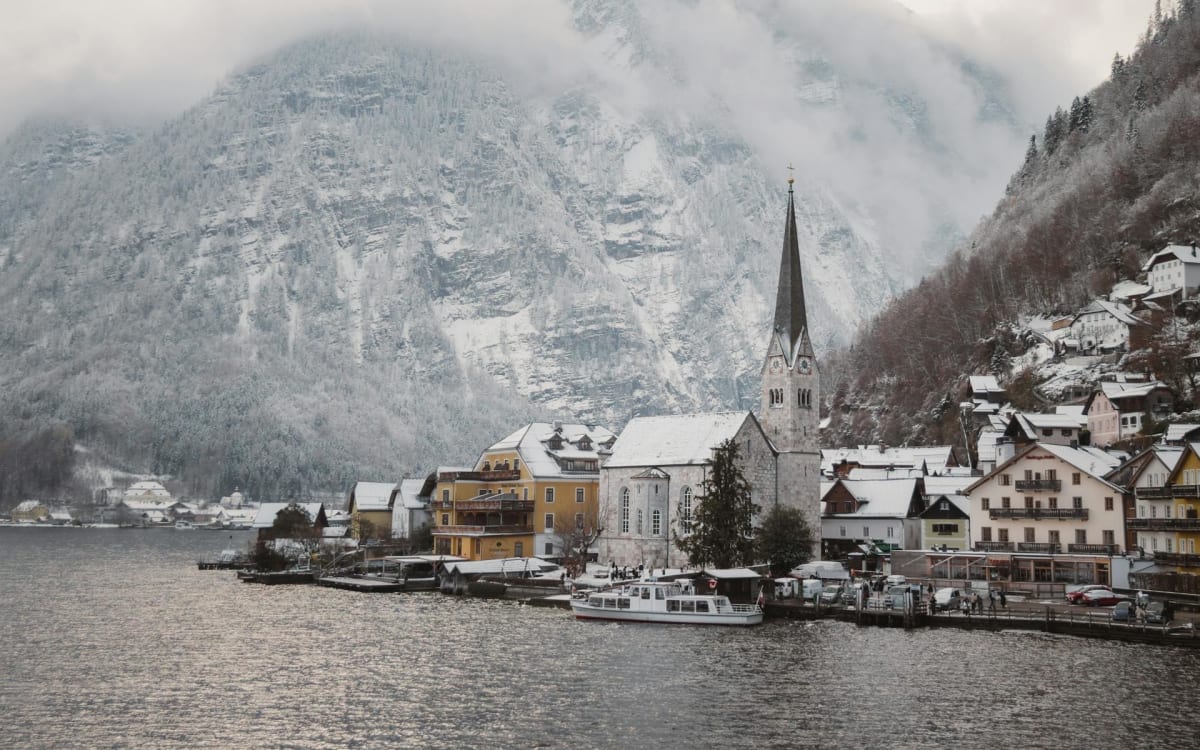
On December 31 you have a choice: a morning at Hallstatt, a lakeside village that looks unreal in winter, or a visit to Hohensalzburg Fortress. Either way, we take a midday train to Vienna, which is about two hours and ten minutes away.
Vienna: fireworks and coffeehouses
Vienna is the finale. After the New Year's Eve celebrations, spend January 1 at Schönbrunn Palace, then at the Belvedere to see Klimt's The Kiss, and settle into a Viennese coffeehouse for the rest of the day. January 2 is for final shopping and a walking tour, and on January 3 you have breakfast together before the transfer to Vienna airport.
New Year's Eve in Vienna
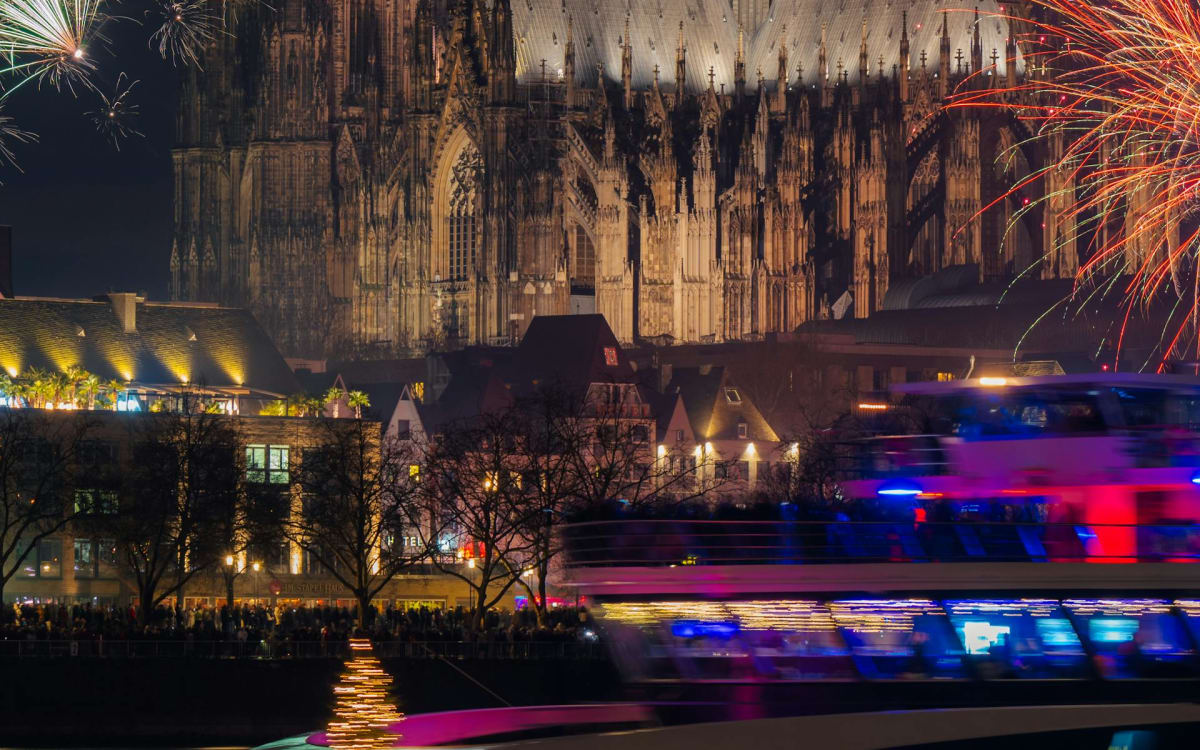
On December 31 the city turns the centre into one large, free party. The Silvesterpfad (New Year's Eve Trail) links open-air stages across the old town, with music, food and drinks from the afternoon until about 2am. It is free, no ticket is required and it is extremely busy, so go early and expect restricted access to the stage areas as midnight approaches. Walking along a parallel side street is often quicker than following the main route, because crowds thin quickly once you leave it. See Vienna's official tourism site for this year's programme.
Getting between the cities
Europe's rail network does most of the work here. The route runs on an overnight sleeper from Amsterdam to Prague, a scenic day train from Prague to Munich (about 5.5 hours), then short hops to Salzburg (about 1.5 hours) and Vienna (about 2.2 hours). On our Loop all intercity train tickets are included, and they run on ÖBB Railjet, ČD and German Rail, so you can look out of the window instead of at timetables.
If you are planning it yourself, book seats and the sleeper early, particularly around Christmas and New Year, and allow a buffer on the days you move.
Money and currencies
Four countries, two currencies. The Netherlands, Germany and Austria all use the euro, and the Czech Republic uses the koruna. Cards are widely accepted, so you rarely need much cash, but a small amount of local currency helps for markets, tips and public toilets. Avoid exchanging money at airports, where the rates are usually poor. Tell your bank you are travelling so your card is not blocked.
What to eat along the route
Part of the fun of Europe in winter is eating your way across it. In Amsterdam, look for stroopwafels, oliebollen (fried dough balls that appear around New Year) and a bowl of warm pea soup. In Prague, try svickova (beef in cream sauce with dumplings) and a proper winter hot wine. Munich means pretzels, white sausage and roast pork in a beer hall. Salzburg and Vienna bring Wiener schnitzel, apple strudel and, of course, Sachertorte with a very strong coffee.
A good rule is to avoid restaurants right on the main squares, where prices are higher and quality is lower, and walk two streets back instead. Ask your host for their favourites, because locals always know a better place.
So which city is for you?
If you can only do one, choose by mood. Want a postcard Christmas? Prague. Want beer halls and castles? Munich. Want calm and cake? Salzburg or Vienna. Want canals and a slow start? Amsterdam. If you have twelve days, link them up, which is exactly what our route does.
Our route, if you would like us to sort it
Amsterdam, then an overnight sleeper train to Prague, on to Munich and Salzburg, and finally Vienna for New Year's Eve fireworks on the Silvesterpfad, with every intercity train ticket handled.
Planning something more private?
Honeymoon, a family trip or just your own friends? We design Custom trips for Europe too, built around your group and your dates.
What to pack for December
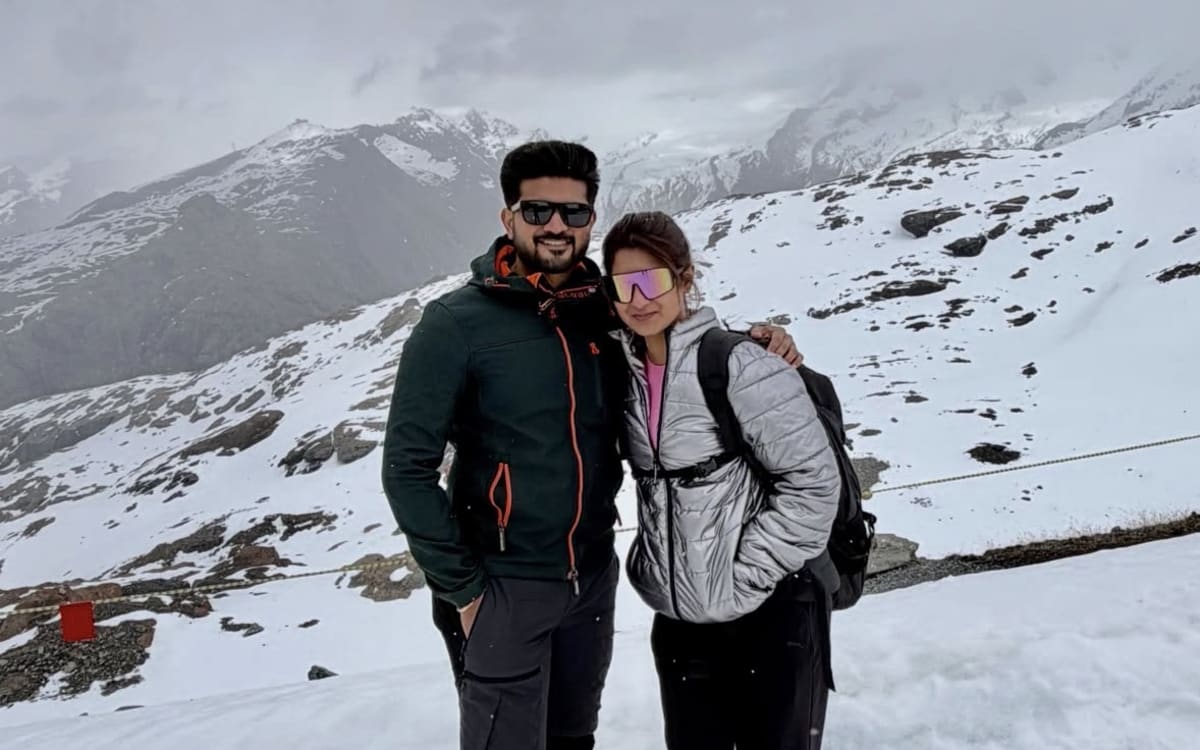
It will be properly cold, often around or below freezing, and it can be damp. Layers beat one giant coat: a thermal base, a warm mid layer, a waterproof outer shell, a hat, gloves and a scarf. Wear boots with good grip, because cobblestones and snow are slippery. Bring a smart outfit for New Year's Eve itself, and a small bag that can hold it all without feeling like luggage.
Visas, in plain English
This route is inside the Schengen area, so Indian passport holders need a Schengen visa. Start early, because documents, hotel confirmations and appointments all take time. On our Loop, the in-house team handles the paperwork with you.
Small group made all the difference. Felt like a trip with friends, not a tour with strangers.
Meera, Bali Loop, Jun 2026
The Schengen visa timeline
You can generally apply for a Schengen visa up to six months before you travel, and no later than 15 days before. In practice, allow at least several weeks. You apply to the country where you will spend the most nights, which on this route is Austria (four nights across Salzburg and Vienna), and applications are made in person at a visa application centre. For a trip that begins on December 23, aim to apply by mid-November. Processing usually takes 7 to 15 days once your documents and appointment are sorted, so that leaves a safety margin. The EU's official Travel Europe site has up-to-date entry information, and your chosen country's embassy page lists visa fees.
For city information, the tourism boards of Czechia, Amsterdam, Munich and Salzburg are good places to start.
Questions
Quick answers to common questions about this guide.
Do I need a Schengen visa?
Yes, Indian passport holders need one for this route. Our team handles the full process, from documents to appointments.
Is it very cold?
Winter in Europe is cold. Pack warm layers, a good coat, a hat and gloves.
How do I get from Amsterdam to Prague?
On the Loop you take the European Sleeper night train, leaving Amsterdam around 10:30 PM on Dec 25 and arriving in Prague around 10:55 AM on Dec 26. You sleep in a couchette.
Is the New Year's Eve fireworks included?
Our Loop rings in the new year in Vienna, with street fireworks along the Silvesterpfad on Dec 31.
How early should I apply for a Schengen visa?
You can apply up to six months before travel and no later than 15 days before, Processing usually takes 7 to 15 days, but allow extra time for documents and appointments. Apply to the country where you will spend the most nights.
Is the Vienna New Year's Eve Trail free?
Yes. The Silvesterpfad is free, with open-air stages in the city centre from the afternoon of December 31 until around 2am. It gets very busy, so arrive early.
Abhishek Doashii is a seasoned traveller and the founder of WanderLOOPS. Follow his trips on Instagram: @abhishekdoashii.
Keep reading
More WanderLOOPS guides on group travel in India.
Group Trips for Solo Travellers in India: How to Choose
Most people who book a group trip alone worry about the same thing: what if I do not fit in? Here is how to choose a trip where you will.
7 min read
How to Make Friends on a Group Trip With Strangers
Strangers on day one, friends by day three. It is not luck. Here are seven habits that make it happen.
7 min read