
Bali, Gili T and Ubud: A First-Timer's 8-Day Plan
Bali is easy to love and hard to plan. Here is a simple way to spend eight days across beaches, an island with no cars and the rice fields of Ubud.
Bali can be four completely different holidays depending on where you sleep. Stay on the coast and it is beach clubs and sunsets. Head inland and it is jungle and rice terraces. Hop on a boat and suddenly you are on an island where nobody has a car.
The trick is not to pick one. It is to give each a few days, in the right order, without losing half your trip to traffic. Here is the eight-day version we like.
Seminyak (2 days), Gili Trawangan (2 days), Ubud (2 days), then back to Seminyak (1 day) before you fly. Go between April and October for the driest weather. November is the start of the wetter season, so pack a light rain jacket and keep a few indoor ideas up your sleeve.
The route in one line
Seminyak for beaches and sunsets, Gili Trawangan for island time, Ubud for jungle and rice fields, then back to Seminyak for the grand finale. Three bases, no rushing, and each one feels like a different place.
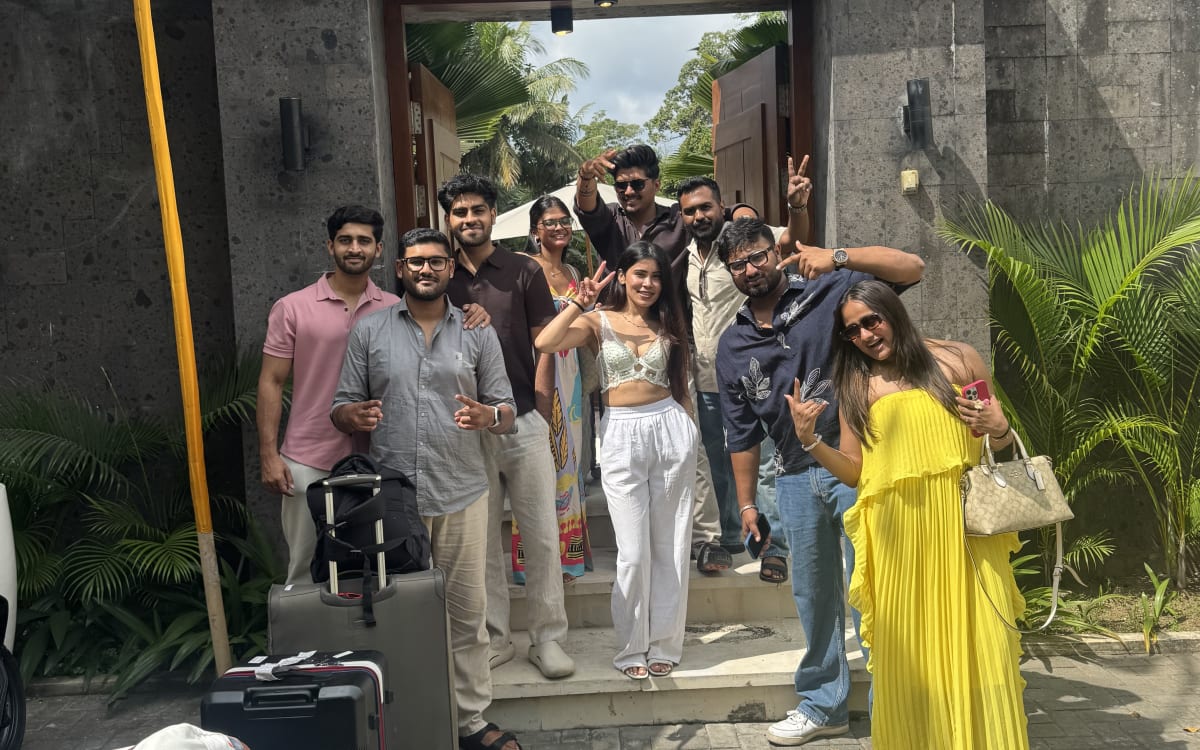
Days 1 to 2: Seminyak, where you land softly
Do not plan too much. You will arrive tired, and Seminyak is the kind of place that rewards doing very little: beach clubs, cafes, a long first dinner. Use these two days to recover from the flight and find your rhythm. If you have always wanted to try surfing, this is the place for a lesson.
Keep your first evening free. Jet lag plus a packed schedule is the fastest way to start a trip grumpy.
Days 3 to 4: Gili Trawangan, the island with no cars
A short fast-boat ride from Bali and you are on Gili T, where there are no cars or motorbikes. You get around on foot, by bicycle or in a horse cart, and the whole island runs at walking pace. Snorkel with sea turtles in the morning, find a beach swing in the afternoon, then watch the sun go down over the water.
If you fancy trying scuba, this is a very gentle place to start.

Came in knowing no one, left with people I still talk to daily. Zero awkwardness, the hosts just get the mix right.
Ananya, Bali Loop, Jun 2026
Days 5 to 6: Ubud, jungle and rice fields
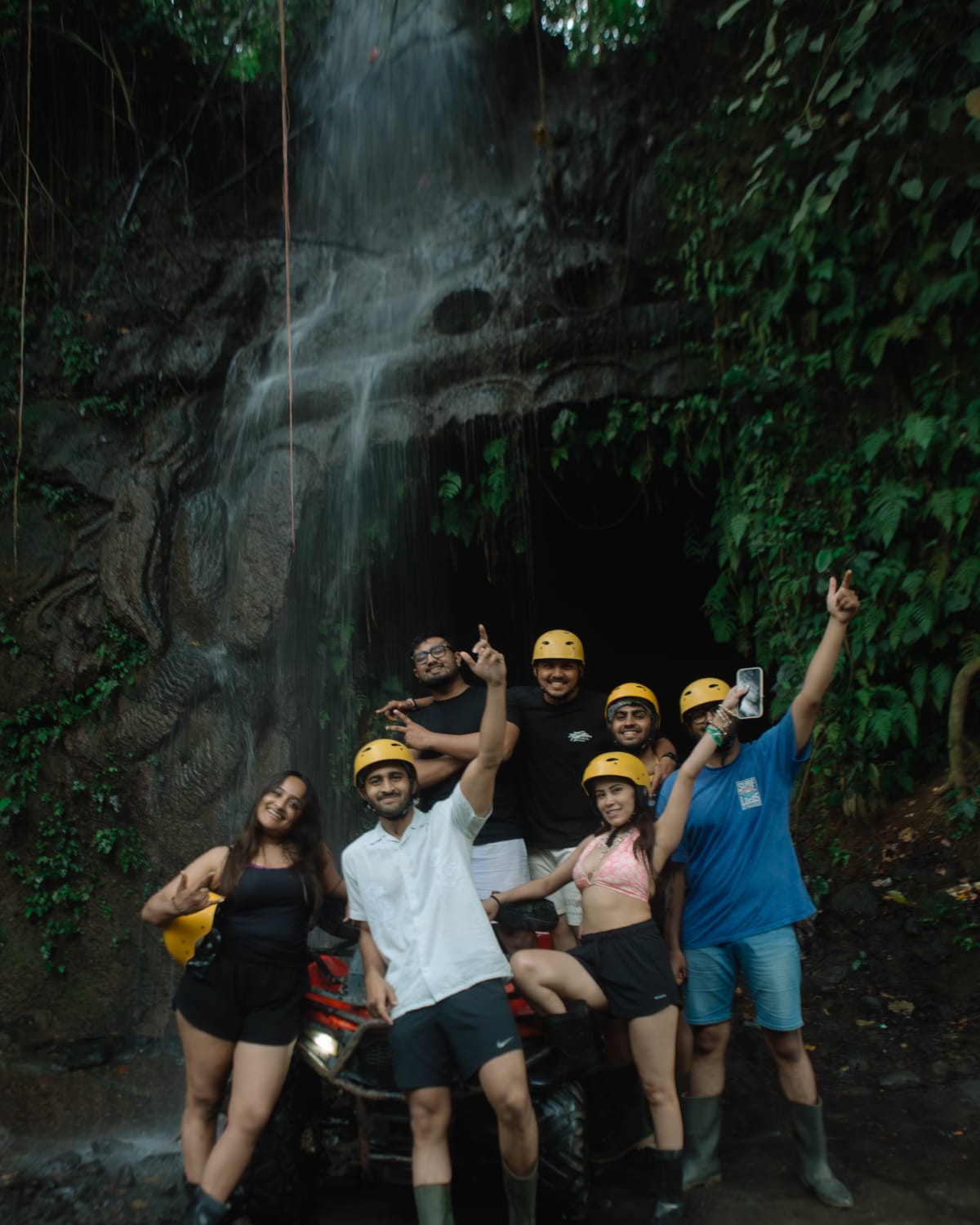
Back on Bali, head inland. Ubud is greener, cooler and quieter than the coast. Spend one day on an ATV through the rice terraces, getting properly muddy, and another wandering the markets with no plan at all.
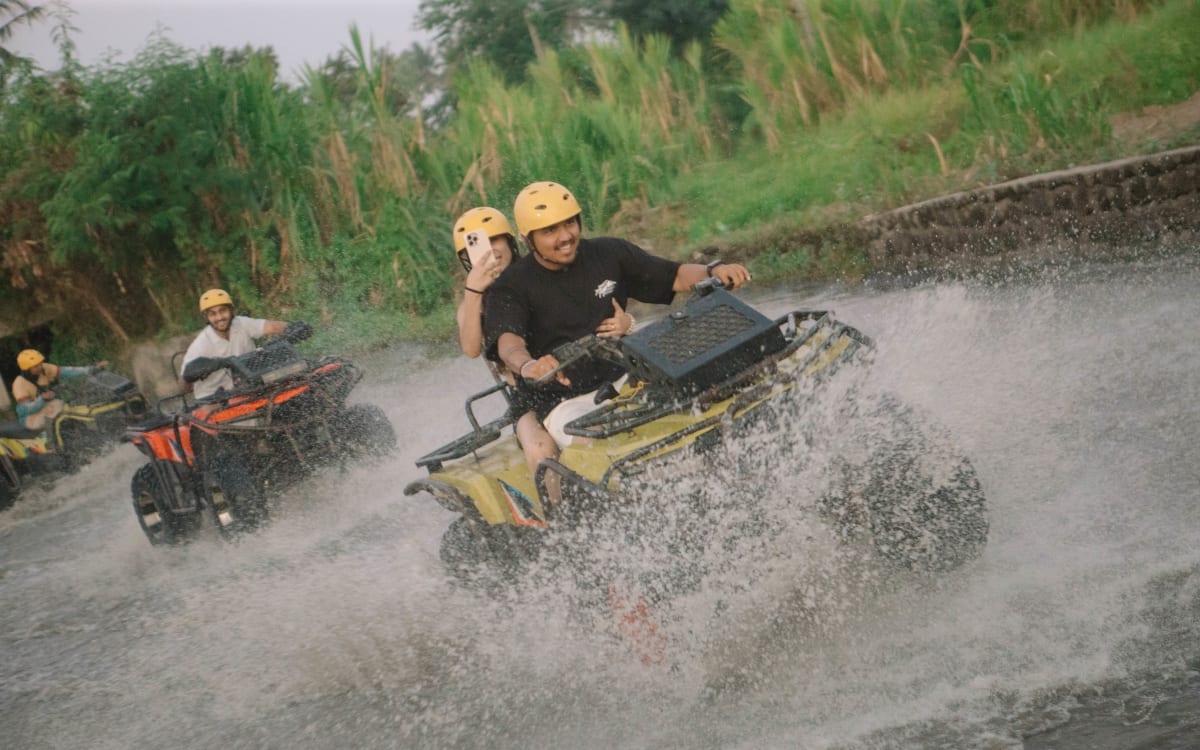
Days 7 to 8: back to Seminyak, then home
Return to the coast for one last sunset and a night to celebrate, then a transfer to the airport. Ending where you started gives you a soft landing before the flight home.
Getting around Bali, and across to Gili
Bali looks small on the map and drives big. Seminyak to Ubud can take well over an hour when the traffic is heavy, and the coast road is rarely empty. That is why we use a private driver between bases rather than scooters. Renting a scooter on your first trip is the single most common way visitors get hurt, and many insurers will not cover you if you ride without the right licence.
The boat to Gili T is the one transfer worth planning around. Fast boats leave from Padangbai on Bali's east coast, and the crossing typically takes about an hour and a half, though some sailings run closer to two hours or more. There are usually around eight departures a day, mostly in the morning and early afternoon, so you want an early start. The sea can be lively, so if you get seasick, take a tablet before you board and sit towards the back, near the middle of the boat.
Once you land on Gili T, forget wheels. You walk, cycle or ride in a horse cart called a cidomo, and the whole island takes about two hours to circle on foot.
When to go
The drier season is roughly April to October. November sits at the start of the wetter season, so expect warm days and the odd shower. It is rarely a washout, but a light rain jacket and a flexible mindset help.
What to pack for Bali in November
Pack light and pack for warm, humid days with the odd shower. Linen shirts, shorts, a swimsuit and a pair of sandals will carry you most of the way. Add a light rain jacket, a hat and sunglasses.
- Reef-safe sunscreen. Reefs around the Gilis are fragile, and it is worth protecting them.
- Mosquito repellent, especially for evenings in Ubud.
- A light scarf or sarong for temples. Many will lend you one, but it is handy to have your own.
- A plug adapter. Indonesia uses two-pin round plugs (types C and F) at 230 volts.
- Grippy shoes you do not mind getting muddy for the ATV ride.
What it costs
If you would rather not stitch this together yourself, that is exactly what our Loop does. Our Bali and Gili trip is below, with everything that is in the price.
Visa, tourist levy and money
Indian passport holders need a visa for Bali. The usual route is the e-Visa on Arrival, which costs roughly IDR 500,000 (about US$35), allows a 30 day stay and can be extended once for another 30 days at a local immigration office. Your passport needs at least six months of validity. Apply through the official portal, molina.imigrasi.go.id, and be wary of look-alike sites that charge extra. On our Loop the E-Visa is included and we handle it for you. Rules and fees change, so always check the official site before you travel.
Bali also charges foreign visitors a one-off tourism levy of Rp 150,000 per person, paid once per trip. You can pay online through the official Love Bali portal before you land, or at the counters at the airport and port. Keep the QR voucher that is emailed to you, as it can be checked.
For money, carry a little cash for small cafes, markets and tips, and use a card for everything else. Cash machines are easy to find in Seminyak and Ubud, but fewer and busier on Gili T, so withdraw what you need before the boat.
The honest bits
Flights are not included, and neither are surfing or scuba, which are optional extras. Everything else, from the villas to the boat transfers, is sorted. We would rather you know that before you book than discover it on the way to the airport.



Travelling respectfully
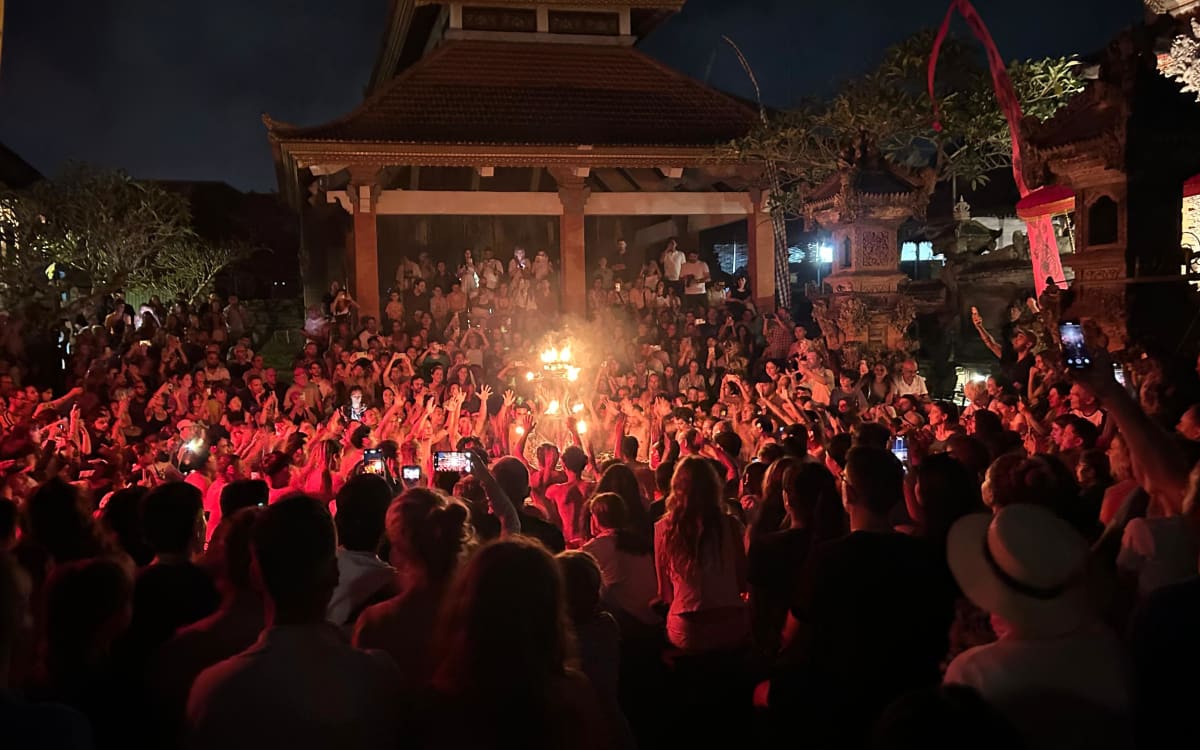
Bali is a living island, not a stage set. The small woven trays of flowers and incense you will see on pavements and doorsteps are daily offerings, so step around them. Cover your shoulders and knees at temples, keep your voice down in ceremonies and ask before photographing people at prayer. Little things like this are why locals are so warm with visitors, and why a short trip feels so good.
Eat where the locals eat. A warung (small family restaurant) serves some of the best nasi campur on the island for a fraction of beach club prices.
Prefer your own crew?
If you would rather go with friends, a partner or a creator crew than with a group of new faces, we plan Custom trips too, in Bali and beyond, on your dates.
Before you pack, run through our free Bali trip checklist: visa basics, documents and a packing list you can tick off on your phone.
Questions
Quick answers to common questions about this guide.
Do Indians need a visa for Bali?
Yes, a visa is needed. On our Loop the E-Visa is included and we handle it. Rules can change, so always check the latest requirements before you travel.
Is Bali good for first-timers?
Yes. Splitting the trip between the coast, an island and Ubud gives you a taste of everything without rushing.
How do you get from Bali to Gili T?
By fast boat. On our Loop the intercity transfers are included.
How much is the Bali tourist levy?
Foreign visitors pay a one-off levy of Rp 150,000 per person, per trip. You can pay online through the official Love Bali portal or at the airport and port counters.
How long is the boat from Bali to Gili Trawangan?
Fast boats from Padangbai typically take about an hour and a half, though some sailings take closer to two hours or more. Most leave in the morning and early afternoon.
Abhishek Doashii is a seasoned traveller and the founder of WanderLOOPS. Follow his trips on Instagram: @abhishekdoashii.
Keep reading
More WanderLOOPS guides on group travel in India.

Group Trips for Solo Travellers in India: How to Choose
Most people who book a group trip alone worry about the same thing: what if I do not fit in? Here is how to choose a trip where you will.
7 min read
Learn to Ski in Gulmarg, Kashmir: A Beginner's Guide
You do not need to live near the Alps to learn to ski. Gulmarg, in Kashmir, is one of India's best-known ski areas, and a week there is a great way to start.
7 min read